
2025 highlights
24th December 2025
2025 has certainly been one to remember. Thank you to our clients, colleagues and industry friends for a fantastic year.
Here are Waterman Aspen’s top moments from 2025… 👀

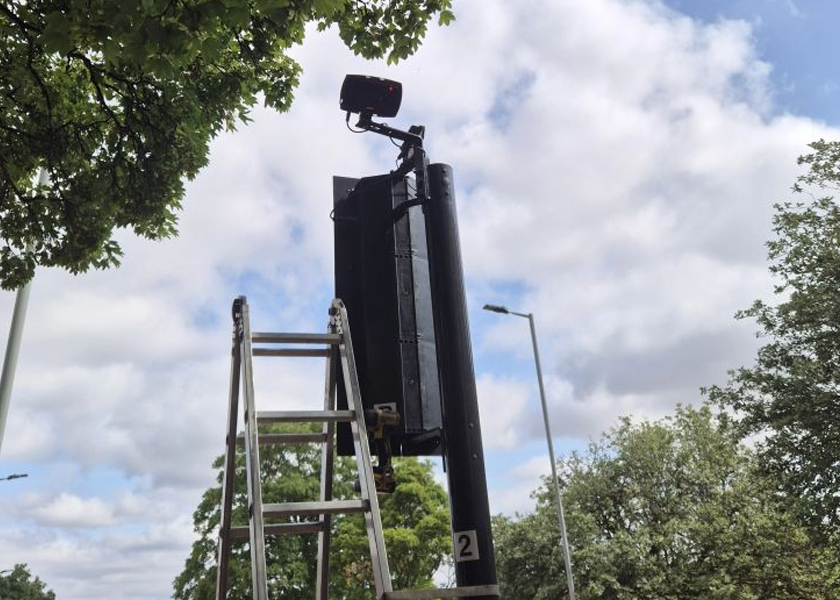

When we last caught up with James Drinkall, he was helping Rotherham Metropolitan Borough Council (RMBC) modernise traffic signals along the A631, using technology to make journeys safer, smoother and more reliable.
As his secondment with RMBC continues, James is turning his attention to another challenge: how traffic signals can respond more effectively to the people waiting to cross the road.
As part of RMBC’s traffic signals team, James is helping to trial new vulnerable road user detection technology at a busy secondary school in Rotherham. His secondment allows him to explore how emerging technology could improve the network for the people who use it every day.
The trial began when traffic detection manufacturer AGD approached James about testing a new kerbside detector.
Having worked in traffic signals for many years and built relationships across the industry, James was asked whether there were any locations where the technology could be put to the test.
A crossing outside a busy secondary school in Rotherham stood out. The crossing had recently been upgraded, but the council continued to receive reports of near misses and pupils taking risks during busy school times. It was an opportunity to see whether smarter detection could make a practical difference.
Rather than simply detecting that somebody is waiting, the technology can identify different levels of pedestrian demand and recognise factors such as pushchairs and mobility scooters.
James and the RMBC team can then use that information to explore whether crossing timings should change depending on who is waiting and how busy the crossing is.
“The priority at that time in the morning is for school kids to get across safely,” James explains.
The important part of the trial is not simply installing new equipment. It is understanding how it can be applied effectively on a live road network.
James has been involved throughout the process, from identifying a suitable site and working with the manufacturer and maintenance contractor, through to configuring the detection zones and deciding what should constitute low, medium and high pedestrian demand.
The next step is to build those requirements into the traffic signal controller and see how the system performs when the school is busy.
At the moment, vehicles may be given up to around 25 seconds to pass through the crossing when traffic is continuous. With the new detector, James and the team can look at shortening this time when a large group of pupils is waiting. The signals would still be able to change sooner if there is a natural gap in the traffic.
The detector could allow additional crossing time when someone needs more time to cross.
Once the system is fully operational, James plans to spend time on site to see first-hand how it responds.
The team will also monitor how often maintenance engineers need to attend the site and whether the detector can reliably identify when somebody has pressed the crossing button but then walked away, potentially preventing unnecessary traffic stops.
The aim is to understand whether it genuinely improves safety, reliability and network performance before considering where else it could be useful.
There is no fixed end date for the vulnerable road user detection trial.
Instead, James and the RMBC team will assess how the system performs in practice. If it proves reliable and delivers the benefits they are looking for, they could consider similar technology at other locations where pedestrian demand changes significantly or where it could better support vulnerable road users.
Schools, railway stations and bus stations are among the locations James believes could benefit from similar technology.
The measure of success will be whether the technology helps people use Rotherham’s roads and crossings more safely.
The trial for James is another opportunity to test new ideas and help RMBC make informed decisions about the future of its network.
24th December 2025
2025 has certainly been one to remember. Thank you to our clients, colleagues and industry friends for a fantastic year.
Here are Waterman Aspen’s top moments from 2025… 👀

29th April 2026
Waterman Aspen is pleased to share that we are now a Company Supporter of The Lighthouse Charity.
28th November 2025
After a fantastic range of nominations this year, we’re delighted to announce that the Royal National Lifeboat Institution (RNLI) has been chosen as our Charity of the Year for 2026.
