
2025 highlights
24th December 2025
2025 has certainly been one to remember. Thank you to our clients, colleagues and industry friends for a fantastic year.
Here are Waterman Aspen’s top moments from 2025… 👀

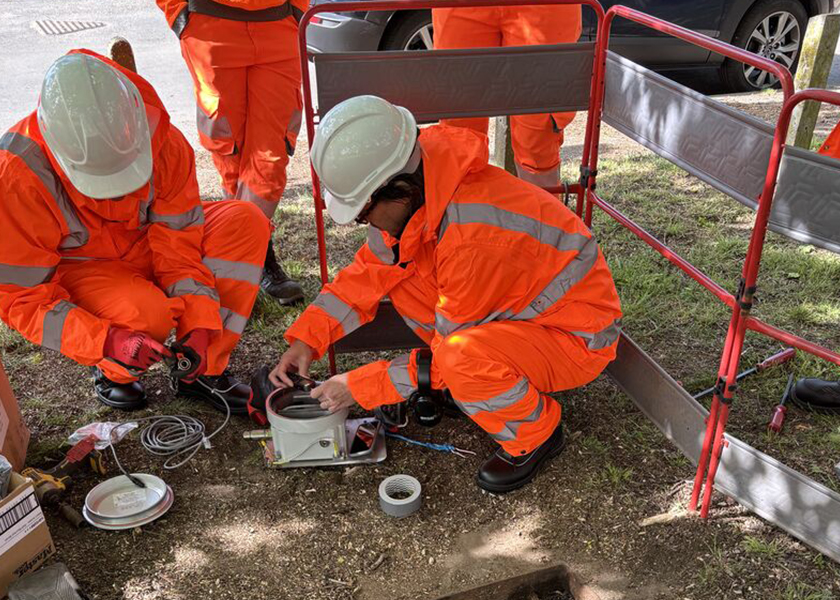

Waterman Aspen is working with Waterman’s parent company, CTI Engineering, to trial an innovative acoustic sensing device in the UK that could help UK water companies identify unwanted water entering the sewer network more safely, quickly and cost-effectively.
The trial is being carried out with Anglian Water, where known infiltration issues provide an opportunity to compare the technology against existing data and traditional monitoring methods.
Originally developed by CTI Engineering in Japan, the device uses sound to monitor changes in flow within sewer networks. It has already been used across more than 200 sites in Japan. The team identified an opportunity to adapt the innovation for the UK water market.
As explored in our previous article, ‘Smart Detection for Hidden Problems’, hidden infiltration is a significant challenge for the UK water industry.
A major focus of the AMP8 (2025-2030) is reducing Combined Sewer Overflow (CSO) spills to meet the OFWAT and DEFRA requirements. With more intense rainfall, changing weather patterns and increasing pressure on existing drainage assets, tools that can help locate the source of additional flows are becoming increasingly important.
This is where acoustic sensing could offer a different approach. Suspended from the top of a manhole, it records the sound of water moving through the pipe network. AI can then identify unusual changes in flow and highlight sections where infiltration may be occurring. This gives water companies a more targeted way to decide where further investigation may be needed.
A key step in bringing the technology to the UK was ensuring it could be used safely within sewer environments. These networks can contain volatile gases, so any electrical equipment must be carefully designed, tested and certified to prevent the risk of sparks. For the device, this meant securing ATEX certification, which confirms it meets the required safety standards for use in potentially explosive atmospheres.
Although the certification process took time, we worked with CTI to develop new units that met these requirements. It was a vital stage in adapting the technology for UK sewer networks and making the trial possible.
The current UK trial is taking place with Anglian Water on a network with known infiltration issues, allowing the team to compare the acoustic sensing results with existing data.
In May 2026, ten loggers were installed across the chosen network. They will record for around two months, capturing both wet and dry weather conditions. Once collected, the sound data will be sent to colleagues in Japan for AI analysis before being reviewed and shared through a technical report.
One of the main benefits of the device is the installation process. Because the logger is suspended from the top of the manhole, operatives do not need to enter the chamber.
During the trial, the UK team reduced the process to around 25 minutes per location. This included arriving on site, setting up traffic management, installing the logger, replacing the manhole cover and moving on to the next location.
This quicker surface-level installation could help reduce disruption, particularly when monitoring multiple locations across a network.
The next stage is to complete the Anglian Water trial, analyse the data and understand how the results compare with existing knowledge of the network. If successful, the findings could help us explore how the device might be developed into a wider service for UK water companies.
With AMP8 placing greater focus on reducing CSO spills, and with climate change continuing to put pressure on drainage and wastewater systems, smarter monitoring tools have an important role to play.
Our work with CTI and Anglian Water marks an important step in testing how this technology can support safer working, more targeted maintenance, reduced disruption and better outcomes for the environment.
24th December 2025
2025 has certainly been one to remember. Thank you to our clients, colleagues and industry friends for a fantastic year.
Here are Waterman Aspen’s top moments from 2025… 👀
29th April 2026
Waterman Aspen is pleased to share that we are now a Company Supporter of The Lighthouse Charity.
28th November 2025
After a fantastic range of nominations this year, we’re delighted to announce that the Royal National Lifeboat Institution (RNLI) has been chosen as our Charity of the Year for 2026.
